cattle train
The Tattooist of AuschwitzThe cattle train is the first and most pervasive instrument of dehumanization in The Tattooist of Auschwitz, the vehicle that carries Lale Sokolov and hundreds of other young Jewish men from Slovakia into the Nazi camp system. More than a mode of transport, it is a mobile prison that strips its passengers of dignity, identity, and hope before they ever reach the gates of Auschwitz, and it returns at the end of the war as the means of Lale's final departure from Birkenau. The train's recurring presence—from the initial journey in April 1942 to the chaotic evacuation in the war's final days—frames the entire arc of Lale's imprisonment and survival.
The Journey into Captivity
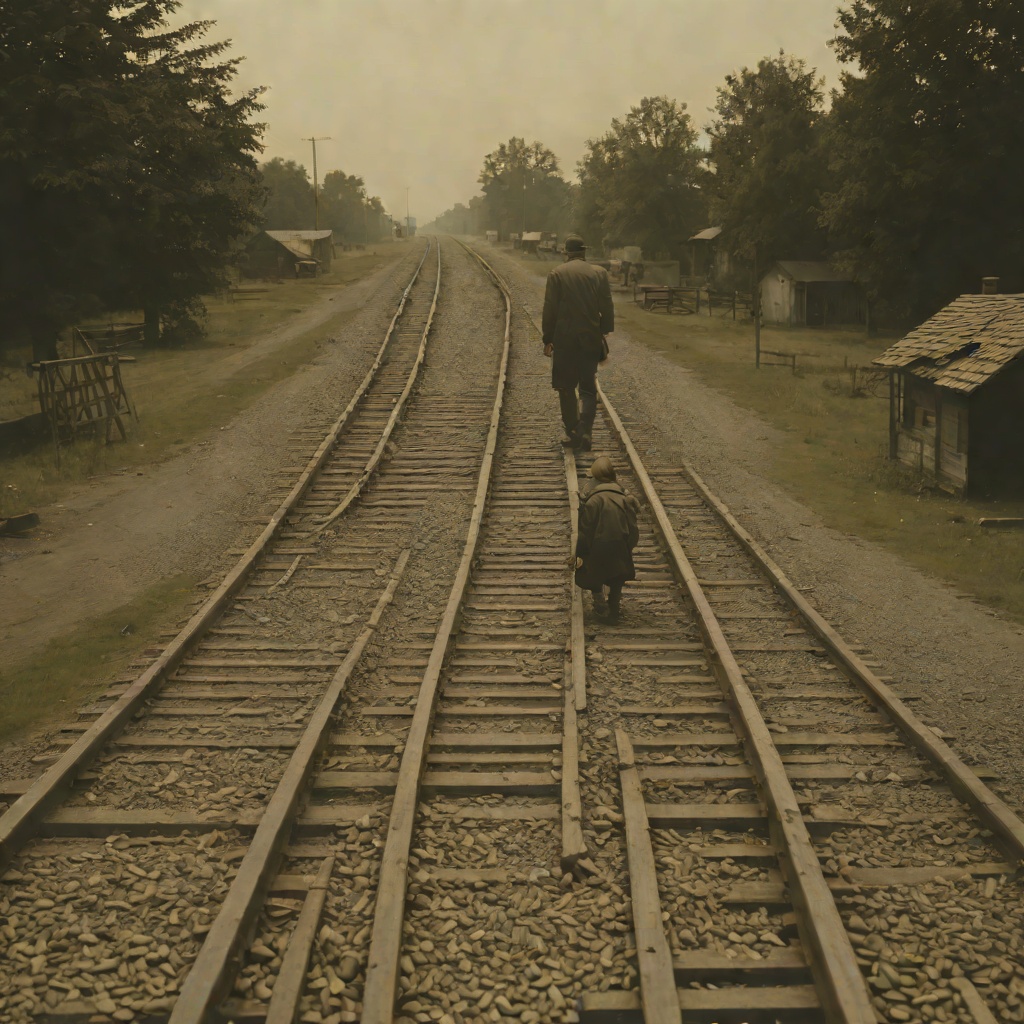
In April 1942, the twenty-five-year-old Lale rattles across the countryside in a wagon designed to transport livestock, keeping his head up and himself to himself. He sees no point in getting to know the man beside him, who occasionally nods off against his shoulder; Lale does not push him away. He is just one among countless young men stuffed into the wagon, having been given no idea where they were headed. Dressed in his usual attire—a pressed suit, clean white shirt, and tie—he clings to the belief that appearances matter, living by the motto to always dress to impress. The wagon is less than ten feet wide, and he cannot see the end to gauge its length. He attempts to count the number of men on the journey with him, but with so many heads bobbing up and down, he eventually gives up. His back and legs ache, his face itches, and the stubble reminds him that he has not bathed or shaved since boarding two days earlier. He is feeling less and less himself.
The conditions inside the wagon are brutal. The men cannot sit, let alone lie down. Two buckets substitute for toilets, and as they fill, a fight breaks out as men try to get away from the stench. The buckets are knocked over, spilling their contents. Lale clings to his suitcase, hoping that with the money and clothes he has, he might be able to buy himself out from wherever they are headed, or at the very least buy himself into a safe job. He feels lucky to have found his way to the side of the wagon, where small gaps in the slats provide glimpses of the passing countryside and snatched breaths of fresh air keep the rising tide of nausea at bay. Though it might be springtime, the days are filled with rain and heavy clouds. Occasionally they pass fields ablaze with spring flowers, and Lale smiles to himself, remembering what his mother taught him: that women love flowers. He takes in whole fields of poppies dancing in the breeze, a scarlet mass, and vows that the next flowers he gives to someone he will pick himself. He starts a list in his head of things to do "when I get home."
Dehumanization and Resistance
The train becomes the site where the prisoners' humanity is systematically stripped away. When the men try to engage Lale in conversation, he responds with words of encouragement, trying to turn their fear into hope, telling them, "We stand in shit but let us not drown in it." Abusive remarks are muttered at him for his appearance and manner, with accusations of hailing from the upper class and the taunt, "Now look where it's gotten you." He tries to shrug the words off and meet the glares with smiles, though inwardly he admits, "Who am I trying to kid? I'm as scared as everyone else." Every hour or so, people ask him similar questions about their destination, and wearying of this, Lale begins to answer, "Wait and see." He is perplexed as to why the questions are directed to him, since he has no special knowledge—he wears a suit and tie, but that is the only visible difference between him and the next man. "We're all in the same filthy boat," he reflects.
What the passengers share is fear, youth, and their religion. Lale tries to keep his mind off theorizing about what might lie ahead, having been told he is being taken to work for the Germans. He thinks of his family back home, safe, and has no regrets about the sacrifice he has made; he would make it again and again to keep his beloved family at home, together. The train journey also becomes a space of dark, defiant humor. When someone remarks that the mattresses have hay in them and suggests they should continue to act like cattle and eat it, there are snatches of quiet laughter. Then, from deep in the dormitory, a hesitant "Mooooooo" rises, and the laughter becomes real. The officer present but invisible does not interrupt, and eventually the men fall asleep, stomachs rumbling. This moment of collective mockery—turning the dehumanizing label of cattle back on itself—becomes an early act of resistance, a refusal to let the Nazis define their humanity entirely.
Arrival and the Loss of Belongings
After two days, the cattle train stops again, this time with a great commotion outside. Dogs bark, orders are yelled in German, bolts are released, and wagon doors clang open. Soldiers shout, "Get down from the train, leave your possessions! Rush, rush, hurry up! Leave your things on the ground!" Being on the far side of the wagon, Lale is one of the last to leave. Approaching the door, he sees the body of a man killed in a skirmish, and briefly closing his eyes, he acknowledges the death with a quick prayer. He leaves the wagon but brings with him the stench that covers his clothes, his skin, every fiber of his being. Landing on bent knees, he puts his hands on the gravel and stays crouching for several moments, gasping, exhausted, painfully thirsty. Slowly rising, he looks around at the hundreds of startled men trying to comprehend the scene. Dogs snap and bite at those who are slow to move, and many stumble, their leg muscles refusing to work after days without use. Suitcases, bundles of books, and meager possessions are snatched from those who are unwilling to surrender them or simply do not understand the orders, and they are then hit by a rifle or fist.
Lale studies the men in uniform—black and threatening, with the twin lightning bolts on their collars telling him he is dealing with the SS. Under different circumstances he might appreciate the tailoring, the fineness of the cloth, the sharpness of the cut. He places his suitcase on the ground, wondering how they will know which one is his, and with a shiver realizes it is unlikely he will see the case or its contents again. He touches his hand to his heart, to the money hidden in his jacket pocket, looks to the heavens, breathes in the fresh, cool air, and reminds himself that at least he is outdoors. A gunshot rings out and Lale jumps; before him stands an SS officer, weapon pointed skyward, shouting "Move!" Lale glances back at the emptied train, where clothing blows away and books flap open. Several trucks arrive, and small boys clamber out, snatching up the abandoned belongings and throwing them into the trucks. A heaviness settles between Lale's shoulder blades as he thinks, "Sorry, Mama, they have your books." The men trudge toward the looming, dirty pink-brick buildings with picture windows, and as Lale walks through the open iron gates, he looks up at the German words wrought from the metal: ARBEIT MACHT FREI. He does not know where he is or what work he will be expected to do, but the idea that it will set him free has the feeling of a sick joke. SS, rifles, dogs, his belongings taken—this he had been unable to imagine.
The Train's Return at War's End
The cattle train reappears at the end of the war as the instrument of Lale's departure from Birkenau. Cannon fire and explosions wake Lale one morning, and he rushes outside with the Hungarians to be greeted by panicked SS and a chaos of prisoners and captors on the move, seemingly oblivious to each other. The main gates are wide open, and hundreds of prisoners walk through unchallenged—dazed, weak from malnourishment. Some stumble around and then choose to return to their block to escape the cold. Lale walks through gates he has been through hundreds of times before on the way to Auschwitz. A train is standing nearby, belching smoke into the sky, ready to leave. Guards and dogs begin rounding up men and pushing them toward the train, and Lale gets caught up in the scrum and finds himself scrambling aboard. The gates of his wagon are slammed closed. He pushes his way to the side and peers out, seeing hundreds of prisoners still wandering around aimlessly. As the train pulls away, he sees SS open fire on those who remain. He stands, staring through the slats of the wagon, through the snow falling heavily and mercilessly, as Birkenau disappears. The train that brought him into the camp system now carries him out of it, its slats once again framing his view of the world, but this time the landscape is one of liberation and loss rather than arrival.
The Train as Symbol and Memory
The cattle train operates throughout the narrative as a symbol of the Nazi project's industrial dehumanization. It is the space where Lale's identity as a man in a pressed suit begins to erode, where his belongings are stripped from him, and where he first confronts the SS. The train's design—a vehicle for livestock repurposed for human cargo—literalizes the Nazi view of Jews as animals, a dehumanization that continues in the camp with the prisoners' own dark joke about acting like cattle. Yet the train also becomes a site of resistance and resilience: Lale's attempts to encourage his fellow passengers, his internal refusal to surrender his fear, and the collective "Mooooooo" that breaks the tension all assert a stubborn humanity within the dehumanizing space.
The train's return in the evacuation scene completes a narrative symmetry. Lale's journey into Auschwitz and his journey out of Birkenau both occur in cattle wagons, both framed by the slats through which he observes the world. The difference lies in what he has become: the young man who boarded in April 1942 with a suitcase and a suit, hoping to buy his way to safety, is replaced by the survivor who has witnessed gas-van murders, torture in Block 11, and the liquidation of the Gypsy camp. The train that once carried him toward the Arbeit Macht Frei gate now carries him away from it, into a future he had vowed to reach when he promised himself he would live to leave this place and walk out a free man. The cattle train, in its final appearance, becomes the vehicle not of death but of the survival that Lale had insisted upon from the very first journey.